
Outcome of the Review
The Design Efficiency Review has focused on identifying opportunities to improve affordability, buildability and long-term value without changing the scheme’s fundamental purpose or flood risk reduction benefits. While the review has considered the overall scheme, including design refinements to the downstream defences with simplified embankment construction, reduced interfaces between work packages and improved buildability, its primary focus has been on the tidal barrier.
This process has included assessing alternative design approaches and newer technologies to ensure the scheme can still deliver the same outcomes but more efficiently. while supporting long-term reductions in operational and maintenance costs
Design Changes
There was growing recognition that the scheme needed to move away from the current aesthetic design of the barrier superstructure in favour of a more functional and cost-efficient form, while maintaining the barrier’s core functionality. Through the review, we have simplified the barrier superstructure while maintaining the same standard of flood protection.
As the design has matured, key elements including the barrier towers, operational requirements, access arrangements, materials and finishes have been refined to support construction, future maintenance and whole-life performance, while remaining aligned with the visual intent of the approved design.
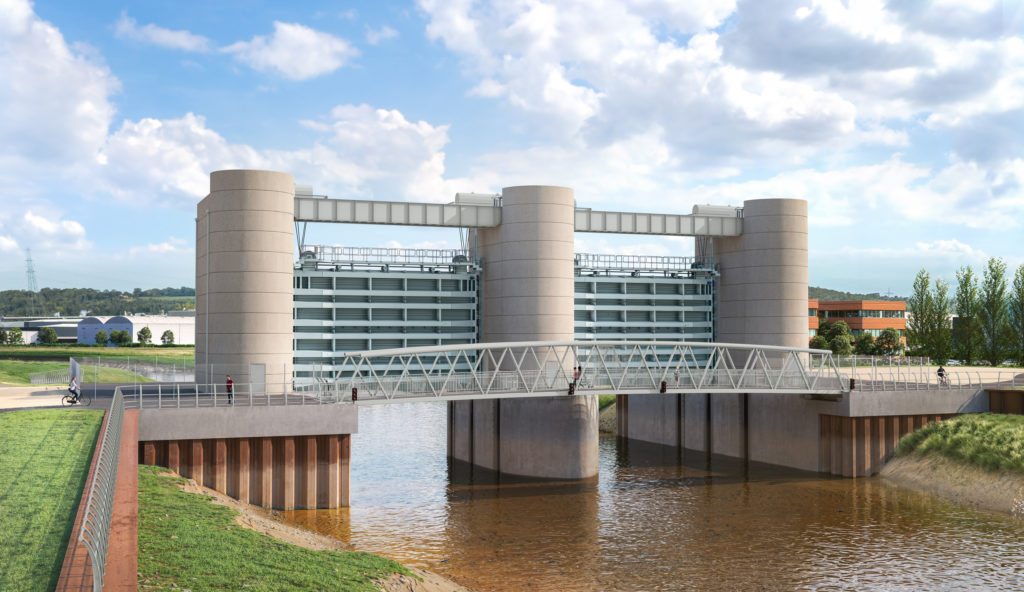
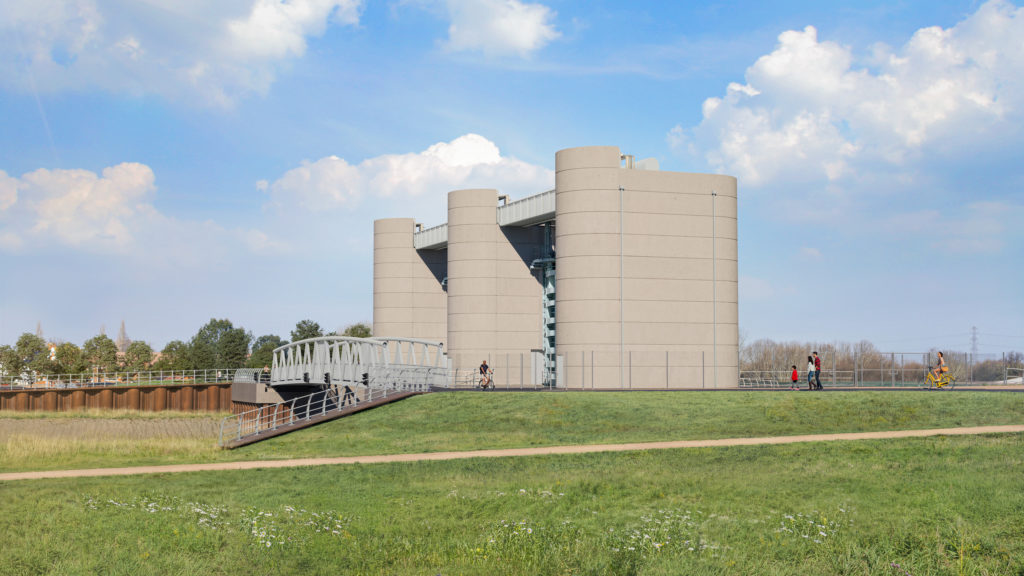
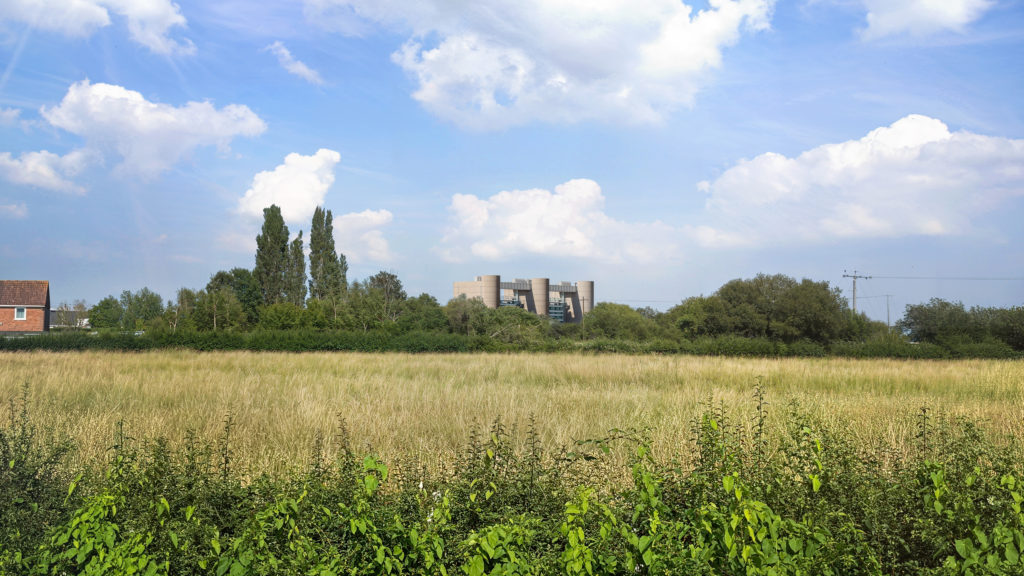
The revised concept design brings a cleaner, more efficient form; three sculptural towers supporting two vertical lift gates across the River Parrett. The design change still responds to the surrounding landscape and retains a strong architectural identity while expressing the precision of functional engineering.
With key refinements to include:
- A 10-metre reduction in overall height, the three towers will be approximately 15-metres high.
- Streamlined, more uniform tower shapes with simplified mechanical systems.
- Relocation of drive equipment (that moves the barrier gates) to the base of the towers, making easier and safer access for maintenance, while reducing long-term operating costs.
- Lighter, high level, operational walkways in place of the former overbridge, providing operational access between the towers.
The project is now transitioning from concept development into detailed delivery planning, reviewing and getting sign off on all the materials and finishes. These developments are helping ensure the final design is not only visually appropriate but also safe, reliable and efficient to operate throughout its design life.
Additional areas of cost refinement such as the operational building and landscape design are under assessment for additional refinements. Once these are finalised, the project will publish an updated timeline on when the barrier will be operational.
The project team has worked collaboratively across client, design, contractor and supply chain to ensure design development and construction activities could progress in parallel. This approach has enabled critical works to continue while the final stages of design refinement are completed.
The images we can share now are of the design as it reaches completion for the Bridgwater Tidal Barrier.
View 1
View 2
View 3
Programme Delivery and Transport and Works Act Order (TWAO)
The BTB Scheme remains fully compliant with its Transport and Works Act Order and environmental commitments, and the project continues to work closely with Somerset Council and delivery partners.
The Design Efficiency Review marks an important milestone, but it reflects an approach embedded across the Scheme: continuous improvement and value engineering. Across the wider programme, the team is refining designs to improve constructability and efficiency without compromising safety, quality or performance.
This includes efficiencies already delivered within the downstream defences, where refinements to embankment design have reduced cost and construction time while maintaining the same height and standard of flood protection. Together, these changes ensure the Scheme remains resilient, efficient and fit for the long term.
Cost
The Government has announced a record long-term investment in flood and coastal resilience, committing more than £10.5 billion between 2024 and 2036 to better protect communities, businesses and critical infrastructure from flooding. The Bridgwater Tidal Barrier Scheme remains a priority project and continues to align with the Government’s long-term investment in climate resilience and flood risk management.
Construction on the Bridgwater Tidal Barrier Scheme continues to make excellent progress, and we remain focused on delivering lasting flood protection, environmental enhancement and wider community benefits for Bridgwater and the surrounding area.
- This review is part of standard government assurance.
- It ensures we continue to deliver best value for public money.
- It supports the case for continued investment in this nationally significant scheme.
This cost to deliver the scheme, includes the barrier and its operating buildings, new and improved downstream flood defence banks, and improved fish and eel passage at up to 12 upstream sites.
Since the scheme’s original business case was approved, the construction industry has experienced significant inflationary pressures affecting materials, labour, energy and supply chains. These pressures have affected infrastructure projects across the UK and the Bridgwater Tidal Barrier Scheme is no exception.
Rather than simply accepting increased costs, the project undertook a comprehensive Design Efficiency Review to review design decisions and identify opportunities to improve affordability and delivery efficiency. This reflects good governance and responsible ownership of public investment.
The Design Efficiency Review has achieved cost increase mitigation, the reduction of upward cost pressure through design simplification, material efficiencies, and construction optimisation, ensuring that public investment continues to deliver the greatest possible return in terms of flood risk reduction, resilience, and community benefit.
The previously published figure of £249m reflects the financial baseline approved in the 2024 business case. The Design Efficiency Review addresses inflationary and market pressures that would otherwise significantly increase the cost above this level.
Value for money is at the heart of every decision on the BTB Scheme. Following the final outcome of this work and updated delivery requirements, the revised forecast cost of the Bridgwater Tidal Barrier Scheme will be shared.
Continuity, value and legacy
The Tidal Barrier
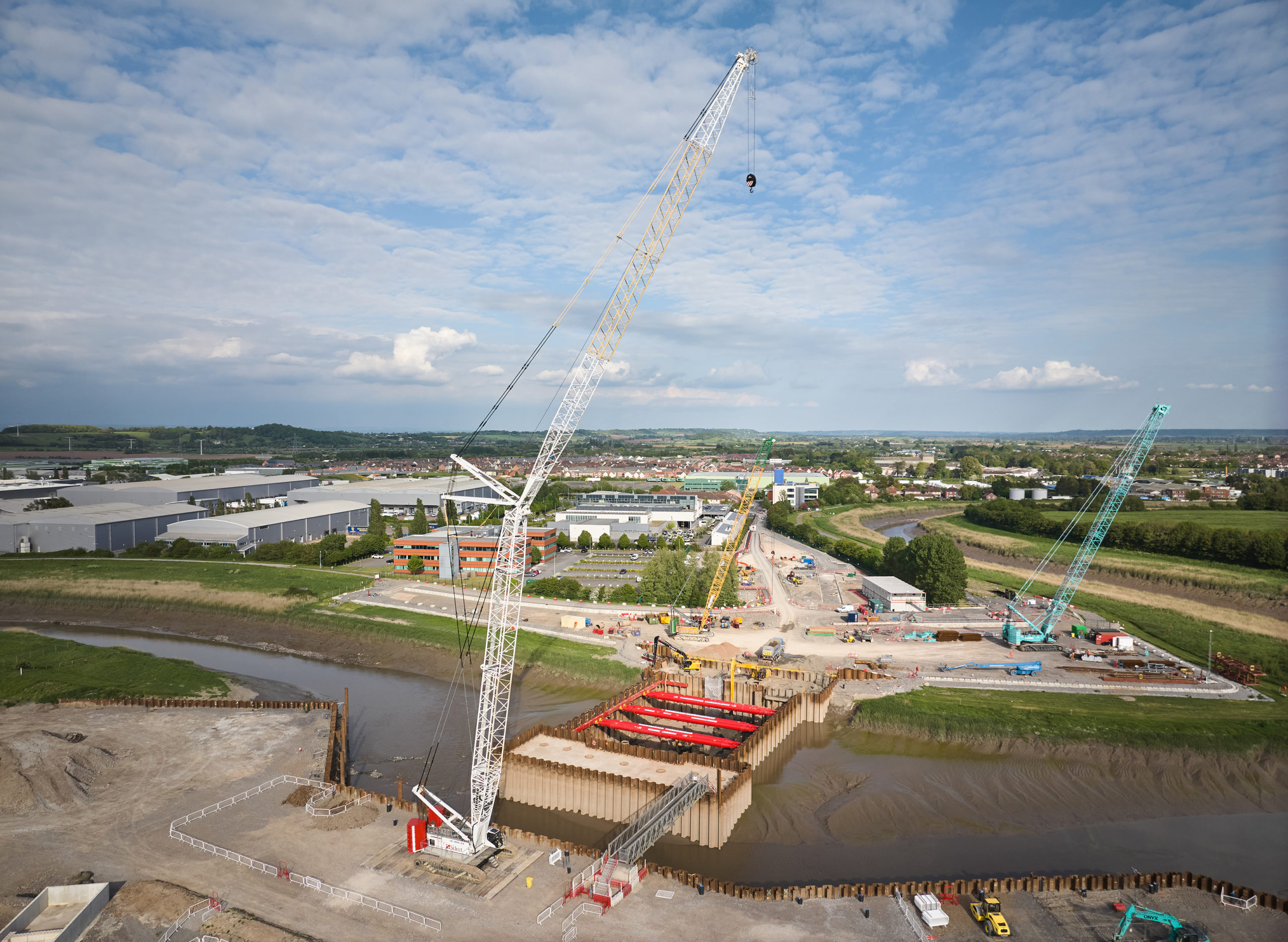
Since construction began in 2023, the project has completed complex enabling works to create a safe environment in which the permanent barrier can now be built. This has included construction of temporary cofferdams, installation of piling, diversion of the River Parrett through a temporary bypass channel and completion of major excavation works.
The activity being progressed represents the next major stage of construction as the project transitions from temporary works to the permanent reinforced concrete foundations that will support the tidal barrier. The building of the superstructure will commence in early 2027.
Downstream Defences
Construction also continues to make excellent progress at Chilton Trinity, Pawlett and Combwich with major earthworks activities delivering both flood protection and environmental enhancement.
Creation of borrow pits have enabled excavated material to provide suitable engineering fill, avoiding the need to import large volumes of material and reducing haulage-related carbon emissions. These borrow pits will form new habitats, helping to create a more diverse and resilient landscape that will provide long-term ecological benefits alongside enhanced flood protection.
The main construction of these three areas aims to be completed by end of 2026.
When complete, the Bridgwater Tidal Barrier Scheme will represent one of the UK’s most significant investments in climate resilience, combining engineering, environmental enhancement and long-term flood risk reduction to safeguard communities across Somerset for generations to come.
Key benefits
This is a nationally significant investment in Bridgwater’s future. The cost reflects the scale and importance of the protection it provides, safeguarding homes, businesses, schools, and vital transport links from tidal flooding.
The benefits go far beyond immediate flood risk reduction: the scheme unlocks future growth, supports new housing and jobs, enhances biodiversity, and strengthens climate resilience for generations to come.
The review ensures we achieve those same outcomes in the most cost-efficient way possible, achieving long-term value, not just short-term savings.
- 12,800 homes and businesses safeguarded.
- Enabling local economic growth and new housing.
- Environmental enhancements: improved habitats, biodiversity links, partnership with WWT and Blue Heritage.
- Community legacy: riverside park and active travel connections.
Engagement
We know change brings questions. We are committed to transparency, regular updates, and two-way engagement as the design changes for the BTB Scheme progress.
Stakeholder will continue to receive tailored briefings where needed as design details evolve. Public updates will be shared through the website, community newsletters, social media, and future drop-in sessions. We will keep communication flowing even while some details are still being finalised.
Questions and answers
What exactly has the Design Efficiency Review decided?
The Design Efficiency Review has improved the Bridgwater Tidal Barrier (BTB) scheme by simplifying the design, using materials more efficiently, and optimising construction. These changes help ensure public funding delivers maximum value through better flood protection, increased resilience, and benefits for the community.
Is the scheme still going ahead?
The BTB Scheme continues with an active construction programme and remains a priority for Government, the Environment Agency and Somerset Council. The recent Design Efficiency Review is about ensuring best value for money, not cutting back on the essential flood risk reduction the barrier will provide.
The core purpose of the Scheme, protecting 12,800 homes, businesses, and vital infrastructure from tidal flooding is unchanged. What has changed is the design of the barrier superstructure: it will now be delivered in a simpler, more functional, and more cost-efficient form. This ensures we still achieve the same level of flood risk reduction while ensuring the Scheme is affordable and sustainable for the long term.
Construction of the barrier substructure and downstream defences is already underway, and progress will continue while the updated design is incorporated.
Why wasn’t a more pared-back look agreed in the first place?
The original tidal barrier design was right for its time. It reflected the best available information, priorities, and affordability context when the project began. As the project has progressed and evolved and market conditions changed, it was both responsible and necessary to review and refine it.
The revised design still has a strong architectural identity; three sculptural towers, a clean, functional form, and visibility as a landmark, but it’s more in keeping with the landscape, will mean less embodied carbon (refers to all the carbon emissions involved in producing and constructing the barrier) and be simpler to maintain and build.
How does the design changes affect the level of protection?
The level of protection for the BTB Scheme remains the same providing a 1:200 year level of service and still protecting 12,800 homes and businesses. This means there is a 0.5% (1 in 200) chance in any given year of a tidal flood event that exceeds the level the Scheme is designed to protect against.
This level of protection will extend to 2125 for Bridgwater and 2055 for the downstream communities of Combwich, Chilton Trinity and Pawlett, reflecting differing flood risk profiles and the role of downstream defences within the wider flood risk system. and still protecting 12,800 homes and businesses.
What elements of the original design are being removed or changed?
The revised concept design brings a cleaner, more efficient form; three sculptural towers supporting two vertical lift gates across the River Parrett. The design change still responds to the surrounding landscape and retains a strong architectural identity while expressing functional engineering.
Key refinements include:
- A 10-metre reduction in overall height, making sure the structure still responds to the surrounding landscape.
- Streamlined, more uniform tower shapes with simplified mechanical systems.
- Relocation of drive equipment (that moves the barrier gates) to the base of the towers, making easier and safer access for maintenance, while reducing long-term operating costs.
- Lighter, high level, operational walkways in place of the former overbridge, providing operational access between the towers.
- The walk and cycle bridge across the river is still included.
These changes reduce construction complexity, cost, and embodied carbon while ensuring the same high performance and safety standards are met.
Do the design changes following the Design Efficiency Review require planning permission?
The Bridgwater Tidal Barrier is covered by a Transport and Works Act Order (TWAO) and planning direction from 2022. These approvals allow flexibility for changes like this without needing a new planning application.
Why was a review necessary now?
To ensure the Bridgwater Tidal Barrier Scheme remains both sustainable and affordable, it was essential to test assumptions, review design choices, and confirm that every stage of delivery continues to represent best value for money.
How do we know the revised scheme is still value for money?
Like all major infrastructure projects, the Scheme has been affected by wider market conditions. Significant inflationary pressures in materials, energy, and labour have driven up costs across the construction industry. By undertaking a structured Design Efficiency Review, the project has taken proactive steps to manage these pressures responsibly and maintain momentum.
The review has achieved cost increase mitigation through design simplification, material efficiencies, and construction optimisation, ensuring that public investment continues to deliver the greatest possible return in terms of flood protection, resilience, and community benefit.
These efficiencies have been realised while maintaining flood risk reduction and the Scheme’s resilience measures.
When will construction finish now?
Enabling construction work started in 2023, substructure works and downstream defences have moved forward well too with significant progress made on site in 2025 and 2026. We will be on site for another 5 years. This timescale includes additional landscaping elements that are part of the wider design of the Scheme. The priority is to make the barrier operational so flood protection is available to Bridgwater and the surrounding areas as soon as possible.