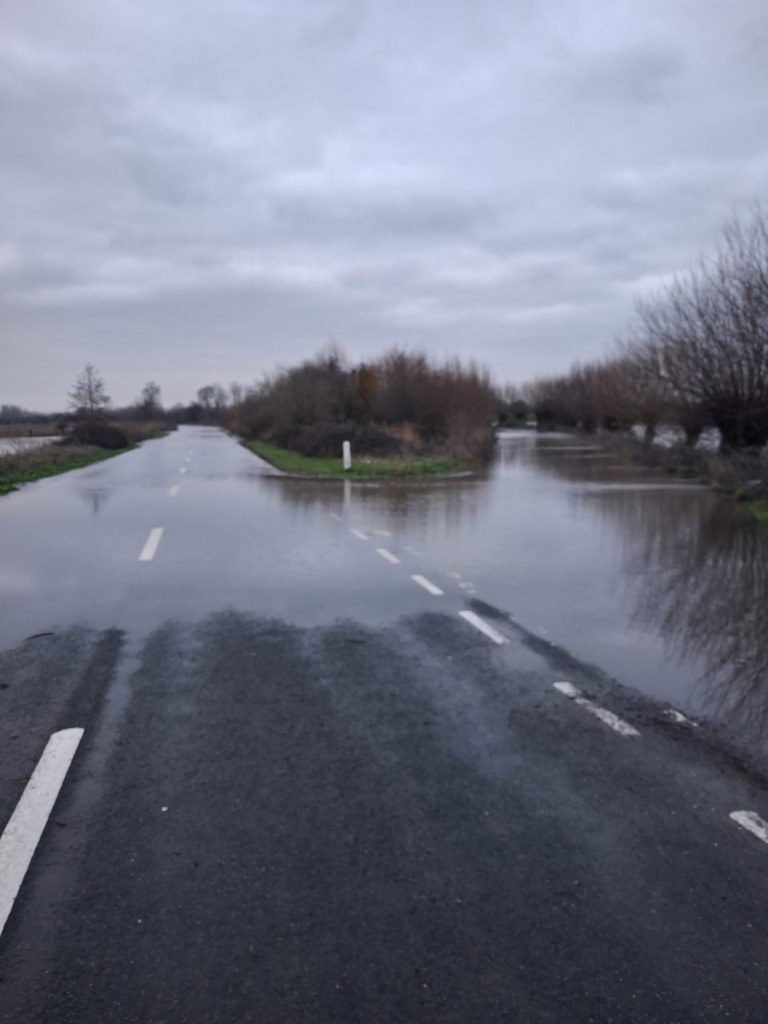
Somerset Council’s Leader has called on the Government to recognise the huge financial impact on rural counties as the Storm Chandra clear-up continues.
Somerset has experienced significant disruption over the past week and remains in a major incident working with partners in response to ongoing flooding on the Levels and Moors.
Meanwhile, more than 850 road defects, which includes potholes, blocked drains, and other highways issues, were reported over the weekend (January 31/1 February) and highways teams are currently working hard to repair more than 3,500 recent defects across the county.
Just last month, the Government announced Somerset was in the top 26 out of 153 authorities in the country for road maintenance, with the overall condition of its roads in various categories scoring Green under the Department for Transport’s new grading system. But unprecedented levels of rain and flooding across roads during January have created a significant challenge in terms of damage to the network and the cost of repairing it.
Somerset Council’s Leader, Councillor Bill Revans, said:
This is another example of where the national model for funding local councils is broken.
In Somerset we are a rural county with a large road network and our geography means we are more vulnerable to flooding. With extreme weather and storms becoming more frequent, we want to invest in roads and infrastructure, but find ourselves in a situation where more and more of our budget must be spent on essential, demand-led services like social care.
We have worked extremely efficiently with limited resources providing a comprehensive maintenance programme in recent years to ensure our network is fit for purpose, but the additional challenge and increasing frequency of these sorts of weather events, means the timely repair of the mounting number of defects will become impossible without additional funding.
We have yet to assess the full extent of the damage to the roads caused by flooding, but we are already seeing about 60 per cent to 70 per cent more potholes this winter than in previous years due to the extreme weather. The cost of fixing those extra potholes alone is likely to be around £1m before we even consider the cost of repairing roads that are currently underwater.
We will continue to work hard to keep our residents safe and our roads in order, but this again highlights the need for long-awaited reform which properly takes into account the additional pressures on rural counties like Somerset.
We would appreciate people’s patience on the network while teams try to deal with this damage.
Anyone who spots a defect on the road is advised that the quickest and easiest way to report it is via the Council’s Report a problem on the road page. Every reported defect is visited and assessed. Depending on the level of risk, repairs are carried out within timescales of:
- 2 hours,
- 24 hours,
- 7 days or
- 28 days.
In some cases, a temporary solution such as traffic management or a short‑term repair may be put in place to ensure the safety of road users, with teams returning as soon as possible to complete a permanent repair.
Where possible, resources are being diverted to target areas with the highest number of defects. The response has also been stepped up: in November there were 15 gangs dealing with potholes, and in response to the recent weather this resource has almost doubled, alongside the deployment of additional patching equipment.